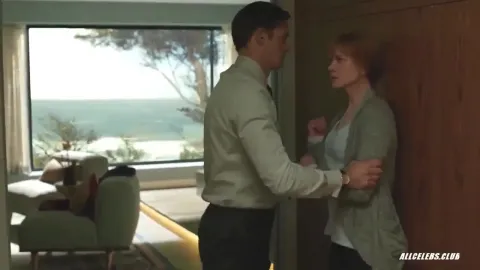
Nudes of Heather Locklear: the Swamp Thing Wet-Tank Scene

Key takeaways
- Her boldest work was the tease, not the reveal
- Melrose Place turned undressing into character work
- Confidence sells a scene longer than skin does
Nudes of Heather Locklear: The Short Version
Plenty of actors built a reputation on taking their clothes off. Heather Locklear built one on almost taking them off, and letting the camera do the rest. She came up in the eighties, on network TV, in an era when a wet T-shirt and a well-lit bedroom counted as an event. Nothing was explicit. Everything was framed. That's the trick, and it's why the conversation about her still runs on suggestion rather than reveal.
So this isn't a checklist of body parts. It's a walk through the scenes people actually remember, in order, with an eye on what the camera was doing and why it worked. If you're hunting for the exact moment the internet keeps circling back to, you'll find it here — and you'll find out it's less about skin than about the way she holds a room.
The Swamp Thing Wet-Tank Scene
The Return of Swamp Thing, 1989. She's Abby Arcane, the human anchor in a movie that is mostly rubber and swamp gas. The film knows exactly what it cast, and it shoots her accordingly: thin cotton, bayou humidity, a nightgown that catches the light, a tank top that stops being opaque about ten minutes in. The camera doesn't rush. It sits on her while she moves through a decaying mansion, and the damp air does the work a wardrobe department usually has to.
What makes the scene land is that she plays it straight. No winking. Abby is the one sensible person in a story about a plant monster, and her calm makes the ogling feel earned rather than pasted on. It's a B-movie doing an A-movie's job with the tease — and she's the reason it holds up on a rewatch.
Melrose Place and the Open Robe
Melrose Place is where the near-nude became a house style. Amanda Woodward arrived as the woman who ran the building and slept with whoever she felt like, and the show dressed her in power suits specifically so it could take them off. The slip. The open robe. The back shot as she crosses a bedroom. Lingerie in a doorway, mid-argument, because the argument was never really about the argument.
The genius of it is that her body reads as leverage. Amanda doesn't get undressed to be looked at; she gets undressed to win. The camera follows her from behind down a corridor and you understand the whole pecking order without a line of dialogue. In an era of shoulder pads and teased hair, that was quietly radical — the undressing was character work, and she sold it with a smirk.
Dynasty, T.J. Hooker and the Silhouette
Go back further and it's all silhouette. T.J. Hooker put her in a police uniform that fit like it was tailored to a poster, and the show found a dozen excuses to get her out of it — off-duty jeans, a leotard, the obligatory pool. Dynasty did the same with more money: swimwear by the water, a towel, the eighties habit of framing a woman against a sunset and letting the credits roll.
None of it was explicit. All of it was deliberate. The aerobics-era body was a selling point and the directors treated it as one, with slow pans and long lenses. What you remember isn't a specific frame so much as a mood: warm light, big hair, and a woman who knows the shot is on her and isn't bothered by it.
Spin City and the Grown-Up Glamour
Spin City changed the register. She came in as Caitlin Moore, a sharp-tongued operator, and the comedy let her play the tease for laughs instead of heat. Pencil skirts. The walk into a room that stops the room. A robe and a mug of coffee in a scene that's really about a bad morning. Because it's sitcom pacing, the camera can hold a beat longer than a drama would and let the audience do the reacting.
The trick here is confidence again, just funnier. She's not the ingenue anymore; she's the woman who's been through it and knows the effect she has. Later guest spots kept that energy — the mature, unbothered version of the same performance she'd been giving since the eighties, minus the shoulder pads.
Why the Tease Beats the Reveal
Here's the thing about the tease: it survives a rewatch. Full nudity is a fact — you see it, you file it, you move on. A slip strap, a wet shirt, a robe that's one gesture from falling, those keep working because the audience is still doing math. The frame is a question, not an answer.
She also came up in the freeze-frame era. People taped these shows, paused them, wore the tape out. That habit never died; it just moved to screengrabs and clip compilations. The scenes that get passed around now are the same ones that got paused then, and for the same reason — they're built to be looked at twice.
So the short version: no grand reveal, no scandal, just three decades of a woman who understood the assignment and a camera crew that understood theirs. Suggestive beats explicit every time, and she knew it.
Where can I actually watch her most revealing scenes?
The memorable ones are mostly on Melrose Place and in The Return of Swamp Thing. Both still turn up on streaming and on disc, and the Melrose bedroom scenes are the ones clip channels keep coming back to.
Did she ever do full-frontal nudity?
Not in the mainstream TV and film work she's known for. Her reputation rests on lingerie, swimwear and wet-clothes scenes rather than explicit full nudity, which is exactly why people talk about the tease instead of a single famous reveal.
Which role should a newcomer start with?
Melrose Place, from the point Amanda takes over the building. It's the clearest example of how she used wardrobe and framing as character, and it's the version of her the culture actually remembers.