Brooke Monk Deepfake: How the Swap Actually Works

Key takeaways
- Deepfakes are built from scraped face data, not magic.
- The tells live in the edges, teeth, and lighting.
- Good clips spread because they feel native to the feed.
Brooke Monk Deepfake Clips Hit Different
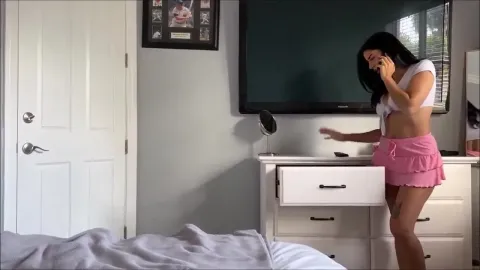
You know the pause. Thumb frozen over the feed, sound off, some clip of a girl who looks exactly like Brooke Monk doing something Brooke Monk maybe never shot. The jawline is right. The little smirk is right. The room is wrong. That half-second of doubt is the whole game. A Brooke Monk deepfake doesn’t need to fool you forever; it just needs to hold you long enough to hit play. The clip opens mid-motion, no intro, no context, just a face you recognize dropped into a body and a bedroom that feel almost plausible. You lean in. The brain starts checking receipts.
That’s the first scene: the hook. It works because Brooke Monk’s face is built for the feed — bright, readable, familiar in a way that feels personal. The fake doesn’t arrive as a tech demo. It arrives as content, dressed in the same vertical frame, same soft light, same casual energy as the real stuff. By the time you notice the edges, you’re already in.
How The Swap Actually Works
Scene two is the build, and it’s less magic than elbow grease. Somebody grabs source material — public clips, posts, streams — and starts pulling frames. They want angles where the face is clear, the head turns slow, the light sits flat. Then they pick a target clip: a body, a room, a performance. The swap happens frame by frame, with masks and tracking points doing the boring work. The software learns the shape of the face, maps it onto the target, and tries to keep the jaw and eyes locked while the head moves.
Then comes the cleanup. Color grading to match skin tones. Grain added so the fake doesn’t look too clean. Motion blur smeared over the seams. A pass through an upscaler to sharpen the eyes and hide the mush. The good ones get a sound pass too — room tone, a little compression, maybe a caption style that matches the platform. Nobody’s reinventing cinema here. They’re chasing the look of a phone clip that got lucky.
The tell is in the labor. A rushed job leaves the face floating, the neck too smooth, the hairline smudged like wet pencil. A careful job hides the work, but it can’t hide time. Every extra second is another chance for the mask to slip.
The Tells You Can Train Your Eye On
Scene three is the inspection, and this is where you slow down. Start at the edges — the jaw, the hairline, the point where the ear meets the cheek. Deepfakes love a still frame and hate a turn. When the head swings, watch the outline. If it wobbles, thickens, or drags a ghost of the original face behind it, you’ve got a fake. Watch the teeth too. They go gummy, crowded, or weirdly uniform, like a row of tiny tiles. The tongue forgets to sit right.
Light is the next giveaway. A real face catches light in small, ugly ways — a shine on the nose, a shadow under the lip, a hot spot on the forehead. Fakes tend to flatten that out. The skin goes smooth and even, lit from everywhere and nowhere. If the room light says window on the left but the face is lit from the right, trust the room.
Then check the motion. Blinks that land too evenly. A smile that arrives without the eyes. Hands that pass near the face and leave the edges buzzing. And listen — audio sync drifts in sloppy edits, the voice sits a half-beat off, the room tone cuts when the clip loops. You don’t need a lab. You need a pause and a second look.
Why They Spread So Fast
Scene four is the spread, and it’s pure feed logic. A Brooke Monk deepfake is short, silent-friendly, and instantly legible. You don’t need to know the creator’s name to get the joke; you just need the face. That makes it perfect for reposts, stitch bait, and group chats. The clip gets saved, re-uploaded, cropped, compressed, and stripped of credit until it’s just a file with a familiar face on it.
There’s a greasy little thrill in sharing one, too. You get to be the person who spotted it, or the person who fooled the group. The comments do the rest — “wait, is this real?” — and every argument pushes it further. The fakes that spread best aren’t the most technically clean. They’re the most native. They look like they belong in the feed, so people let them belong.
And because the source material never runs out, neither do the edits. New clips mean new angles, new rooms, new chances. The face stays the same. The scene changes.
Sharing Without Getting Burned
Scene five is the share, and this is where you keep your dignity. Before you pass it on, do the edge check and the light check. If it still holds, say “looks like a deepfake” instead of “this is fake” — you’re allowed to be wrong. Credit the source when you can. Don’t strip the creator’s handle just to make the post cleaner. If the clip is NSFW, say so up front; nobody likes opening one on a bus.
Keep a mental note of the usual suspects: soft jaw, gummy teeth, flat light, drifting audio, a face that never quite touches the pillow. None of those prove anything alone. Together they buy you a pause. That pause is the whole defense.
And if you’re the one making them, don’t overclean. Leave the grain. Match the room tone. Check the hairline before you export. The audience is sharper than the comment section makes them look.
What To Expect Next
Scene six is the shrug and the watch. The tools get easier, the tells get smaller, and the feed keeps swallowing both. Brooke Monk deepfake clips will keep landing because the face is familiar and the format is cheap. You won’t catch every one. You don’t have to. Learn the edges, trust the light, and keep your thumb ready. The pause is still yours.
What exactly is a Brooke Monk deepfake?
It’s a clip where Brooke Monk’s face has been digitally swapped onto another body or performance using face-mapping software. The result can look close to real, especially in short, low-resolution vertical clips.
How can I spot one before I share it?
Pause on the edges and the light. Check the jawline, hairline, and teeth for smudging or wobble. Watch for flat skin, drifting audio, and shadows that don’t match the room. If it still holds, call it a deepfake rather than a fake.
Why do these clips keep showing up in my feed?
They’re short, silent-friendly, and built for reposts. The face is familiar enough to stop a scroll, so people save and re-upload them. That loop keeps them circulating long after the original post.